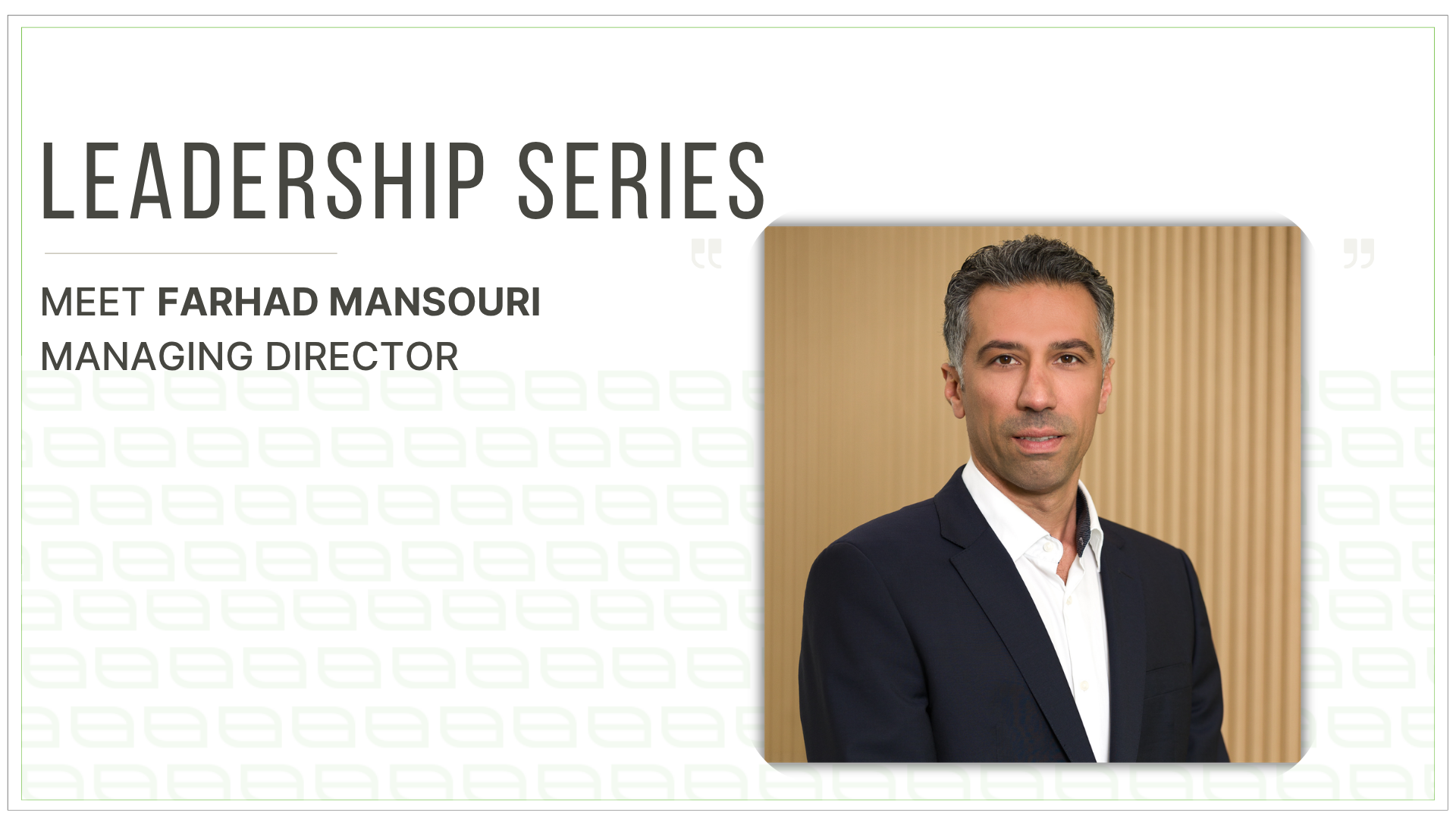
BRC Leadership Series – Farhad
Great workspaces start with great leadership. In our Leadership Series, we’re sitting down with the people behind BRC to share the values, lessons, and ideas that drive how we design, build, and deliver office furniture solutions. Next in the series is Farhad Mansouri, Managing Director. From leading BRC through a period of industry transformation to building a culture where small, everyday improvements compound into real advantage, Farhad shares how his leadership philosophy has evolved, why he defines success by relationships rather than financial results alone, and why he believes “trust is built through your actions, not your title.”
Building for the Long View
Sit down with Farhad Mansouri, Managing Director at BRC, and one thing quickly becomes clear: for him, leadership isn’t measured in quarters. It’s measured in decades.
Financial results matter, Farhad says — they let BRC invest in people, products, and the future. But they aren’t how he defines success. Success is when employees are proud to work at BRC and know they have room to grow. It’s when customers see BRC as trusted partners, not simply suppliers. It’s when the company continues to innovate while maintaining the quality and reliability it’s built its reputation on.
And ultimately, success is building relationships that last for decades — with employees, customers, dealers, suppliers, and community. “If we achieve those things,” Farhad says, “the financial performance will follow.”
Innovation, One Improvement at a Time
For Farhad, innovation isn’t just about launching new products. It’s about finding better ways to do everything BRC does — improving manufacturing processes, reducing lead times, investing in technology and automation, and collaborating with customers to solve challenges that don’t have standard solutions.
“Sometimes innovation is a major breakthrough,” Farhad explains. “More often, it’s hundreds of small improvements that, together, create a significant competitive advantage.”
That mindset shows up as a culture of continuous improvement — one that belongs to everyone. From the production floor to engineering, customer service, Sales, and leadership, every part of the business is expected to find better ways forward. “I encourage people to never become comfortable with ‘the way we’ve always done it,'” Farhad says. “Every process can be improved. Every day is an opportunity to learn something new.”
When people feel empowered to suggest ideas — and know those ideas will be heard — improvement becomes part of the company’s DNA.
Leadership That Empowers
Farhad’s philosophy on leadership has evolved with him. Early in his career, he focused heavily on solving problems himself. Over time, he came to see that the strongest organizations aren’t built by leaders with all the answers — they’re built by leaders who develop great people who solve problems together.
Today, his role is less about answering questions and more about providing direction, removing obstacles, and helping others grow. Leadership, for Farhad, is about trust, accountability, continuous learning, and making decisions that benefit the company not just today, but years from now.
It’s also the advice he gives to anyone building a career: never stop learning, listen more than you speak, and above all, “build trust through your actions, not your title.” Leadership isn’t about being the smartest person in the room, he says. It’s about helping others become successful.
A Culture Built on Consistency
Culture, Farhad believes, doesn’t happen by accident. It comes from consistent leadership and everyday actions.
As BRC continues to grow, that consistency matters more, not less. Every decision needs to reflect the company’s core values — respect, accountability, teamwork, integrity, and customer commitment. That means investing in communication, in leadership development, and in recognizing the people who live those values every day.
“Growth should never mean losing who we are,” Farhad says. His goal is for BRC to become a bigger company while still feeling like one where people know each other, support each other, and take pride in what they build.
Relationships Measured in Decades
Ask Farhad what truly sets BRC apart, and the answer isn’t about products or processes. It’s about relationships.
BRC’s flexibility, its people, and its willingness to customize solutions instead of forcing customers into standard products all matter. Being a Canadian manufacturer gives BRC the ability to respond quickly and maintain exceptional quality control. But the real differentiator, Farhad says, is trust.
“Many of our customers have been with us for years because they know we’ll stand behind our products, solve problems together, and do what’s right. In today’s market, that kind of trust is one of the most valuable advantages a company can have.”
That trust starts with listening. Customers have taught BRC to be more flexible, to think differently, to keep improving. Some of the company’s best ideas have come directly from customer conversations. “We don’t see customer feedback as criticism,” Farhad says. “We see it as collaboration.”
Looking to What’s Ahead
Looking forward, Farhad sees an industry entering a period of real transformation. Technology, automation, AI, and data are allowing manufacturers to become smarter, faster, and more responsive than ever before. Customers are asking for more too — speed, flexibility, customization, and sustainability without compromising quality.
But Farhad doesn’t believe technology will replace people. “It empowers them.”
For BRC, that creates real opportunity — a chance to build on the experience, the people, and the manufacturing capability that have shaped nearly 50 years of the business, and continue setting new standards.
When Farhad thinks about the legacy he hopes BRC will leave, it isn’t about scale. It’s about staying true. That the company never lost sight of what mattered. That it continued to innovate while staying true to its values. That employees were treated with respect. That customers knew they could rely on it. That it built partnerships instead of transactions — and helped shape the future of Canadian manufacturing by proving that quality, innovation, and people can grow together.
“If that’s our legacy,” Farhad says, “then we’ll have accomplished something far more meaningful than simply building furniture.”