Open Office: How to Design Collaboration Spaces That Work
Collaboration has become one of the most valuable currencies inside the modern workplace. When people can easily share ideas, move between tasks, and work alongside one another, creativity expands and productivity rises. That is why open offices and shared collaboration zones have become essential elements in today’s most effective workplace strategies.
But successful collaboration does not happen by accident. It comes from designing spaces that encourage connection without sacrificing clarity, focus, or comfort. At BRC, we believe the best collaboration spaces strike that balance, bringing brilliant minds together while keeping teams grounded, organized, and supported.
Why Collaboration Spaces Matter
Research consistently shows that thoughtfully designed collaborative environments make a measurable impact on performance.
A study published in the Harvard Business Review found that employees who engage in frequent face-to-face interactions demonstrate higher productivity and stronger team alignment.* Another study in the Journal of Environmental Psychology revealed that well-designed shared spaces can boost creativity and improve problem-solving performance.**
Collaboration spaces do more than provide a place to meet. They foster trust, strengthen communication, and create the conditions for teams to do their best work.
Designing Open Offices with Purpose
An open office should feel energizing, but never overwhelming. The key is designing collaboration areas that support teamwork while keeping the workplace functional, comfortable, and free from clutter.
Here are a few principles to guide your space planning:
Create zones with intention
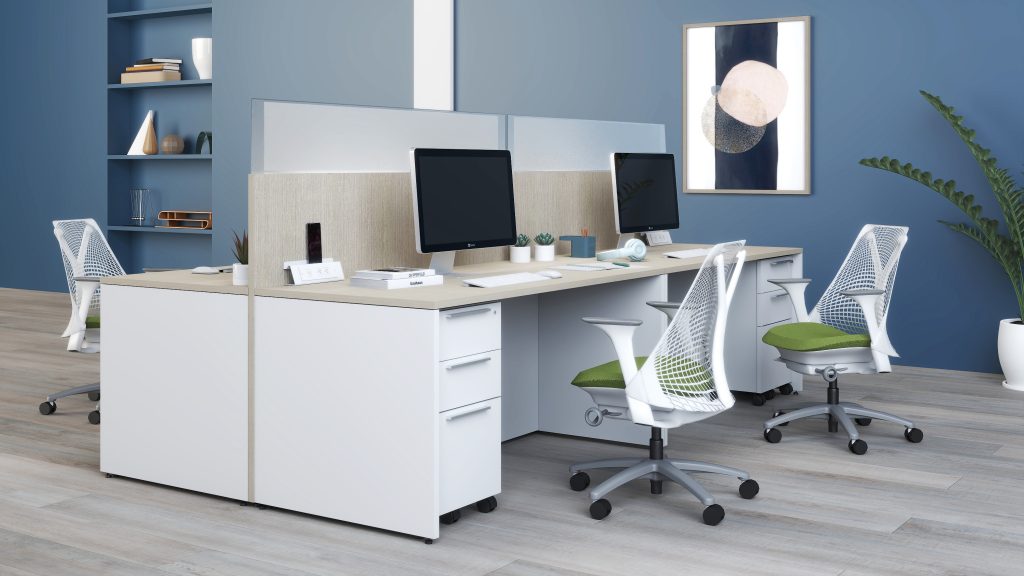
Instead of one large open space, divide the environment into zones for brainstorming, quick working sessions, and focused work. This can be done through furniture placement, islands, storage units, or subtle visual markers.
Balance openness with acoustic control
Collaborative spaces thrive when noise is managed. Soft seating, acoustic panels, and strategic layout choices help reduce distraction while allowing conversation to flow naturally.
Integrate storage to avoid clutter
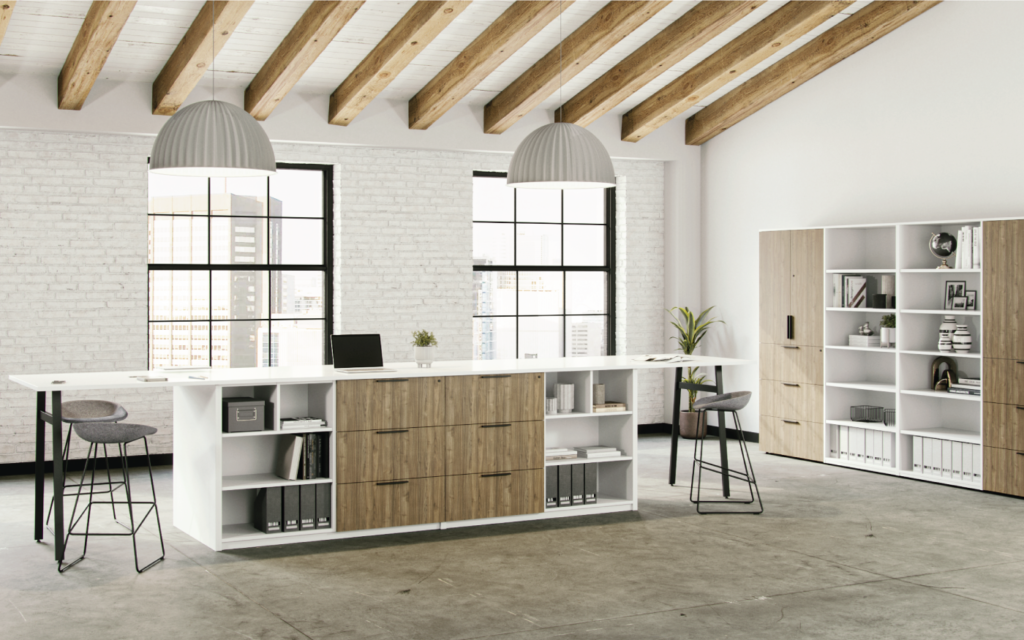
The most common downfall of open offices is the rapid buildup of visual chaos. BRC’s storage solutions—lockers, islands, credenzas, towers, and pedestals—help keep supplies, personal items, and shared resources organized and out of sight.
Support movement and flexibility
Collaboration works best when people can move freely. Modular furniture, height-adjustable tables, and multi-use islands allow teams to shift from quick huddles to deeper discussions without friction.
Leverage natural light and clean design
Light, brightness, and simplicity help support clear thinking. Keep collaboration zones airy and visually clean to avoid overstimulation.
BRC Collaboration Solutions
BRC offers a range of products designed to enhance teamwork while maintaining an organized and cohesive workspace.
Islands
Serving as both work surfaces and storage hubs, islands are ideal for quick meetings, project collaboration, and shared work. Their dual-purpose design maximizes function without adding clutter.
Lockers
Lockers keep personal items contained so collaboration areas stay clean and intentional. By reducing visual noise, they allow teams to concentrate on the work at hand.
Storage Collections
Credenzas, towers, hutches, and mobile pedestals ensure supplies stay accessible but hidden, giving collaborative spaces the structure they need to remain orderly and productive.
These products create open environments where people can collaborate freely without sacrificing organization, comfort, or professional polish.
The best collaboration spaces are not the ones that simply look open, they are the ones that feel open, energizing, and thoughtfully structured. When teams have room to think, space to create, and an environment that supports clarity and comfort, the work that follows is always stronger.
Design your collaborative spaces with intention, and you design a workplace where great ideas come alive.
Explore BRC’s collaborative solutions at brc.group.
References
Harvard Business Review, “The Importance of Face-to-Face Communication,” 2017.
** Journal of Environmental Psychology, “Workspace Design and Creative Performance,” 2015.