Designing for Focus: Why Acoustic Solutions Are the Next Big Thing
Open-plan offices were supposed to solve the problem of collaboration. Instead, they created a new problem that nobody fully anticipated: noise. Ask employees what bothers them most about their workplace, and the answer is almost always the same. Across post-occupancy survey after post-occupancy survey, acoustic distractions top the list: ringing phones, background chatter, the overheard conversation two desks over. Approximately 70% of employees say they’re regularly disrupted by office noise, and the effect on concentration is real. Research shows that a single nearby conversation can cut an employee’s productivity by as much as 66%. Our brains are wired to track intelligible speech, and once that process starts, getting back to focused work takes time most people don’t have.
After years of quieter remote work, employees returned to offices with a much lower tolerance for this kind of disruption. The bar for acoustic comfort has shifted, and workplace design needs to catch up.
Acoustic Performance Has Become a Design Priority
The response from the design community has been meaningful. What used to be an afterthought, adding a few panels after complaints rolled in, is now being treated as a fundamental part of how a space is planned from the start.
A few approaches have emerged as particularly effective:
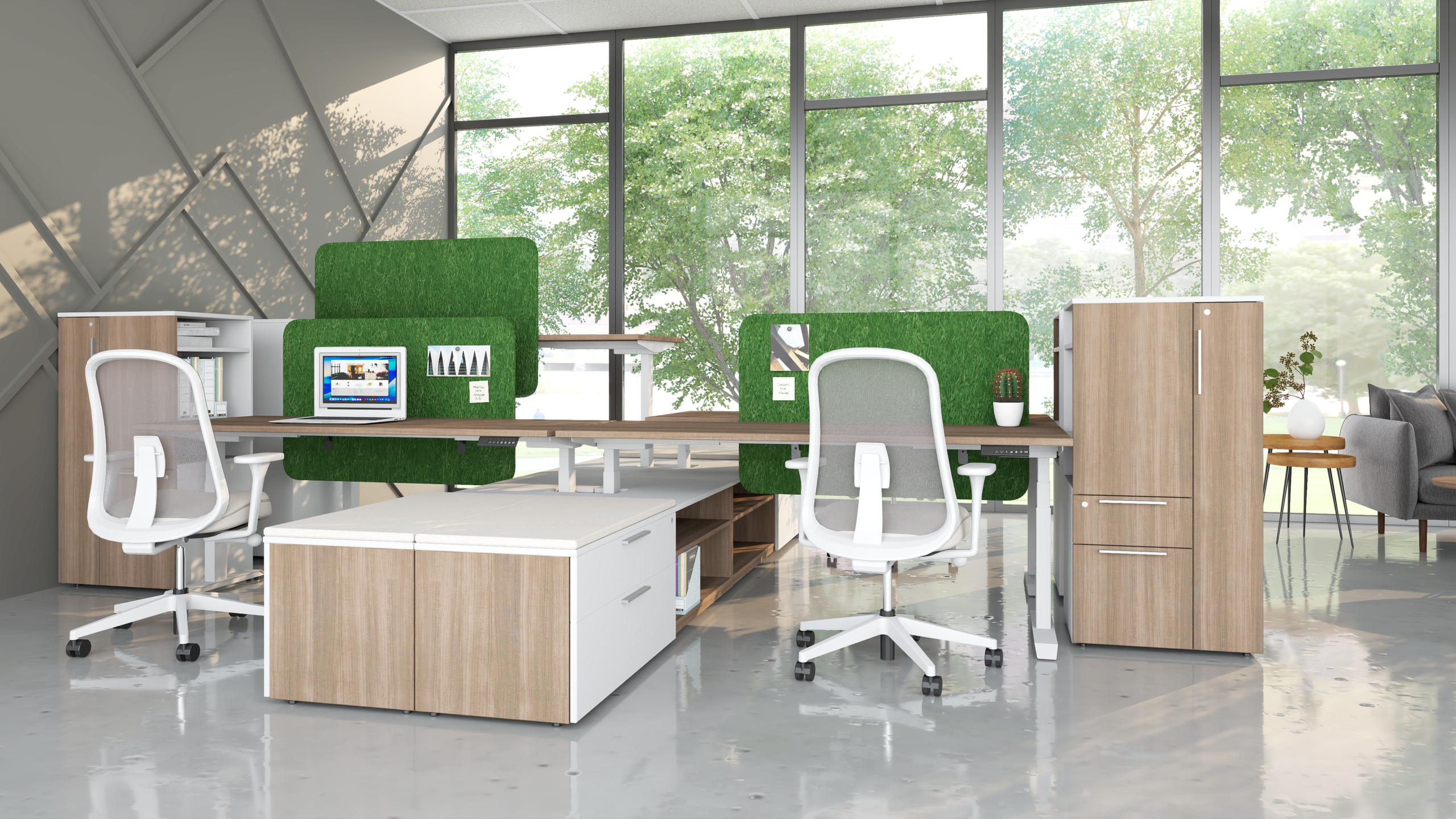
Sound-absorbing panels placed on walls, ceilings, and workstation screens interrupt sound waves before they travel and accumulate. Materials like PET felt are especially effective because they’re porous, lightweight, and easy to integrate into existing environments without major construction.
Smart zoning is about separating how a space is used, not just how it looks. Quiet focus areas, phone booths, and defined collaboration hubs give people permission to behave differently in different parts of the office and that behavioural shift matters as much as the physical one.
Sound masking systems layer in a subtle ambient frequency that makes nearby speech less intelligible at a distance. On its own, it’s a modest improvement. Combined with absorptive surfaces and thoughtful layout, it changes the acoustic character of a space significantly.
The results are worth noting: a well-planned acoustics strategy can reduce conversational distractions by half and improve concentration by close to 50%. These aren’t soft benefits; they show up in how people feel at work and how much they get done.
Introducing Softscape™ — BRC’s Answer to the Open Office
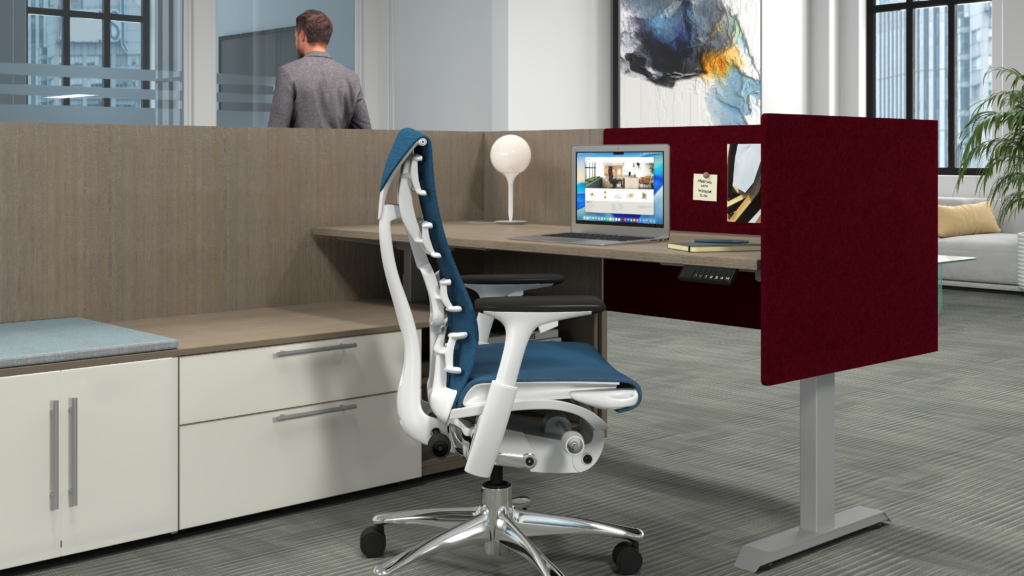
BRC has been watching this shift, and Softscape™ is our response to it. It’s a line of acoustic PET panel solutions — desk-mounted screens, modesty panels, and freestanding dividers — built specifically to address noise and privacy in open environments.
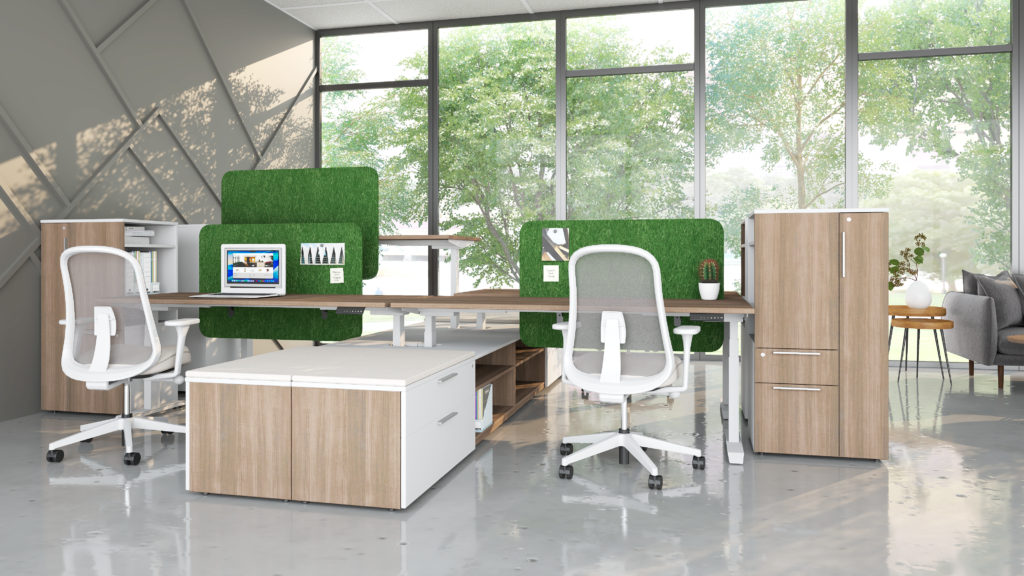
The panels absorb sound, reduce reverberation, and interrupt direct sound paths between workstations. They’re lightweight, easy to reconfigure, and available in two profiles: one with clean architectural lines, and a curved-edge version for spaces that call for a softer look. Both come in a range of colors that work with most commercial interiors, so acoustic performance doesn’t come at the expense of design.
Sustainability in Action
Softscape™ panels are manufactured with sustainability in mind, using 60% recycled PET content and 100% recyclable materials. Free from formaldehyde binders, dust, and odors, they offer a safe and environmentally responsible solution for acoustic privacy. Every panel is designed to minimize environmental impact while maximizing performance and design flexibility, supporting BRC’s bigger commitment to a more circular, low-waste future.
Acoustic Panels Work Best as Part of a Bigger Picture
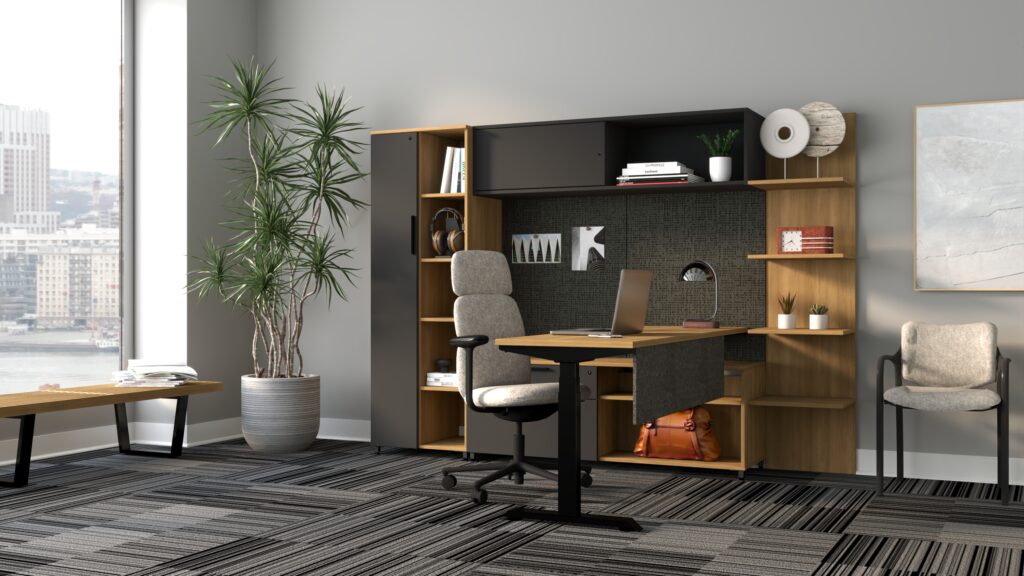
Softscape™ does real work on its own, but it’s most effective when it’s part of a broader approach to how a space is designed. BRC’s modular panel systems and workstation configurations let designers go further, creating defined enclaves, semi-enclosed quiet zones, and structured separation between collaboration areas and heads-down work areas, all within an open floor plan.
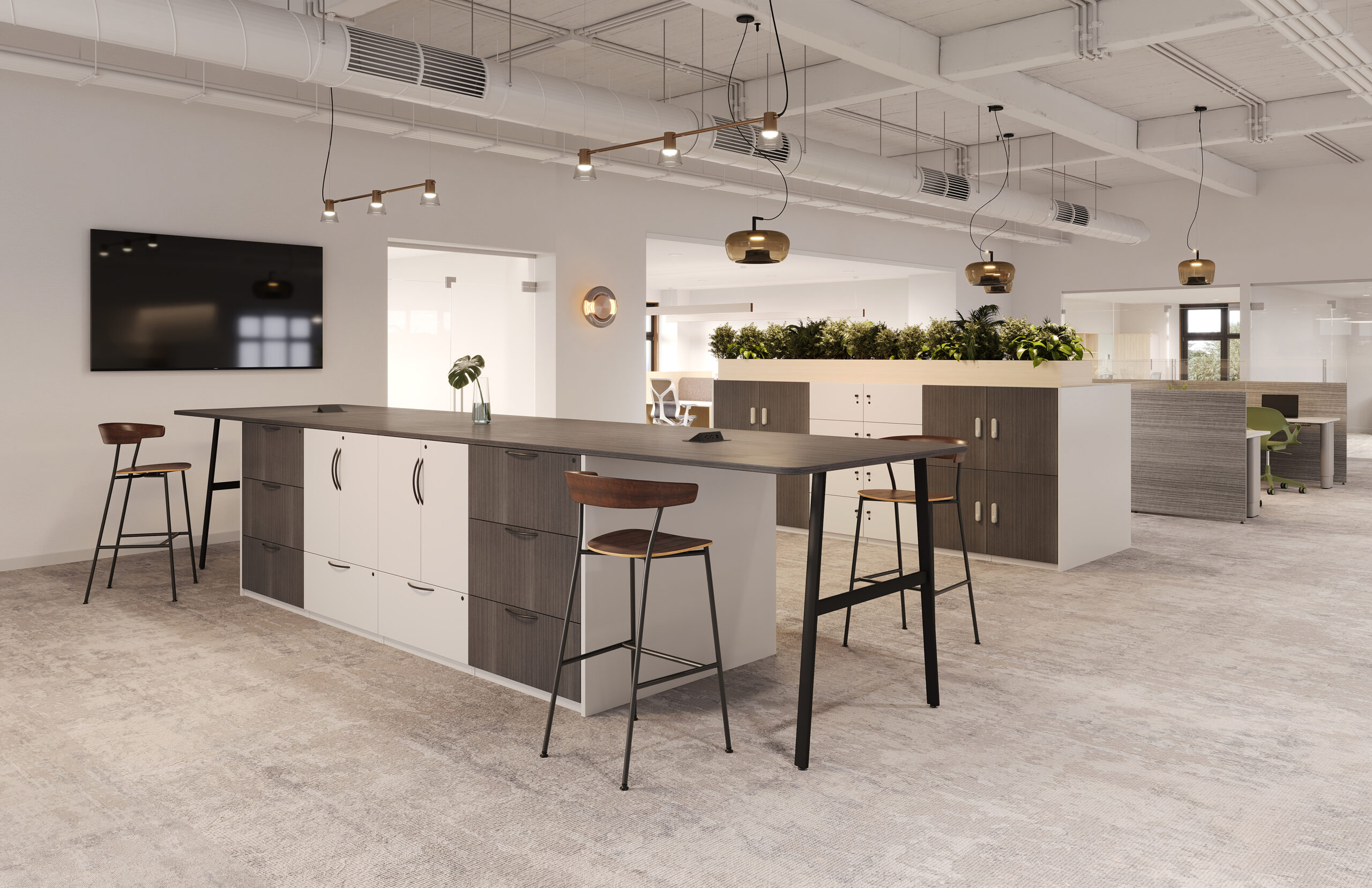
Storage units, cabinetry, and space dividers can serve double duty here, subtly absorbing sound and acting as physical buffers between noisy and quiet zones. The goal isn’t to eliminate openness, it’s to give people enough acoustic control that they can actually use the open space productively.
When people have the ability to find quiet when they need it, and the choice to collaborate when that’s the task, they perform better and feel better about where they work. It’s not a complicated equation, but it does require intentional design.
Where BRC Fits In
Noise reduction is no longer a nice-to-have. It’s becoming one of the primary criteria clients use to evaluate whether a workplace is actually working for their people. BRC is positioned to help Dealers lead that conversation. Products like Softscape™ solve a real problem, and with the broader furniture systems to back them up. The offices that will attract and retain talent over the next decade won’t just look good. They’ll feel good to work in. Acoustics is a big part of that, and it’s an area where thoughtful product selection and smart planning make a measurable difference.
Sources
- Haworth, Inc. “Decrease Office Noise to Increase Productivity.” 2024. https://www.haworth.com/na/en/spark/articles/2024/q2/decrease-office-noise-to-increase-productivity.html
- Speakwise. “Workplace Noise Statistics 2026: Open Office Decibels, Concentration Loss, and Acoustic Distraction.” Speakwise Blog, 2026. https://speakwiseapp.com/blog/workplace-noise-statistics
Officing.com. “BRC Group Introduces Softscape: Acoustic PET Solutions Designed to Enhance Privacy and Focus.” February 13, 2026. https://officing.com/new-products/2026/2/13/brc-group-introduces-softscape-acoustic-pet-solutions-designed-to-enhance-privacy-and-focus